
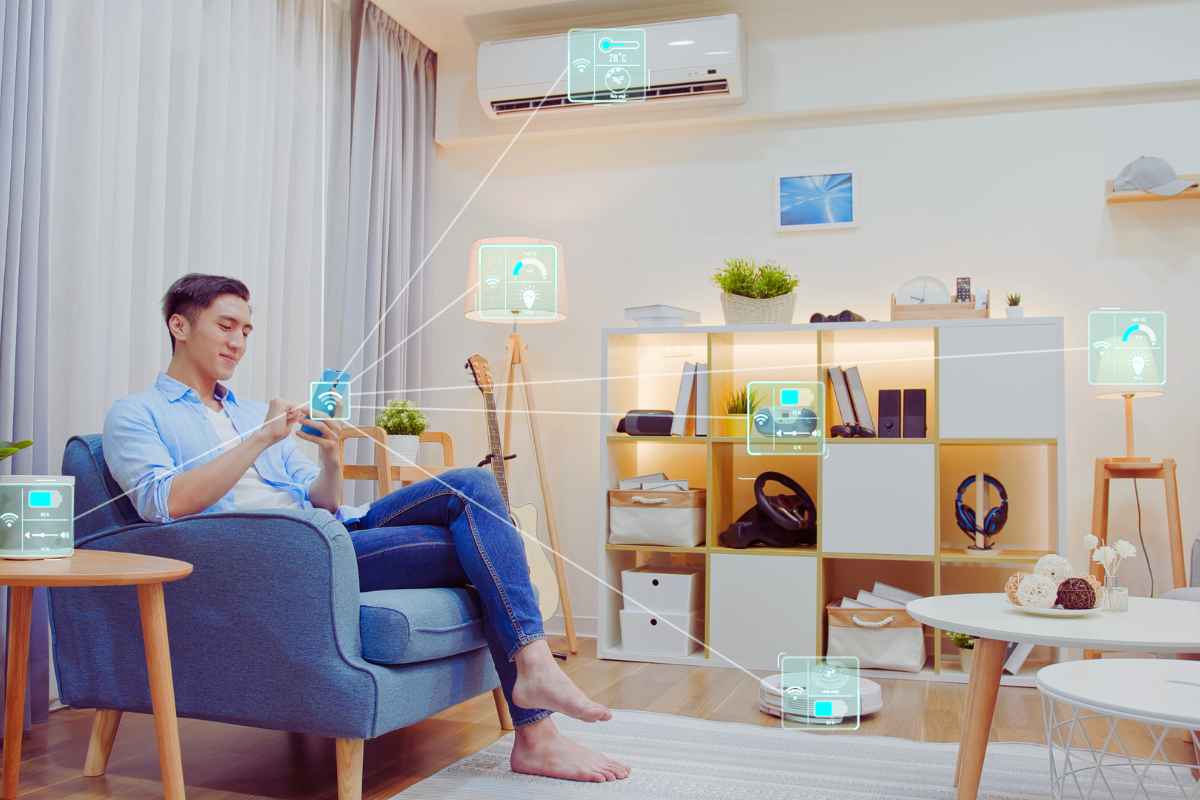
Home security has traditionally meant locks, alarms, cameras, and perhaps a security guard or monitoring service. Today, connected technology is changing how homeowners interact with and monitor their properties.
Modern home automation can bring security, lighting, climate control, access, and entertainment into a connected environment.
The idea is simple: rather than treating security as a completely separate system, it can become part of the way the home operates.
When someone leaves the property, for example, a single “Away” scene could switch off selected lights, adjust the HVAC settings, close curtains, and activate designated security functions.
When the homeowner returns, another scene can reverse selected functions automatically.
This combination of convenience and control is one of the defining features of a modern smart home.
Bringing Security and Automation Together
A connected home can incorporate several security-related technologies, including:
- CCTV and video surveillance
- Smart door locks
- Video doorbells
- Access control
- Motion detection
- Door and window sensors
- Alarm systems
- Automated lighting
- Remote notifications
The exact combination depends on the property and the homeowner’s requirements.
The advantage of integration is that these systems can work alongside other home functions.
For example, if motion is detected in a particular area at a programmed time, the system could respond according to the homeowner’s chosen settings. Exterior lighting could be activated, an alert could be generated, or a camera feed could be made accessible through the control interface.
Automation does not replace sensible security practices, but it can make different security functions easier to manage.
Control Your Home From Your Phone
Remote access is one of the most practical features of connected home technology.
The ability to control your home from your phone can give homeowners access to important functions even when they are away from the property.
Depending on the installed system, homeowners may be able to:
- Check connected cameras
- Manage selected lights
- Adjust temperature
- Control doors and access
- Activate or deactivate programmed scenes
- Receive notifications
- Manage entertainment systems
Imagine being away from home and receiving a notification about activity at the property. Instead of having no visibility until you return, an integrated system may allow you to check the relevant camera or connected device remotely.
The exact features available depend on the equipment, configuration, connectivity, and security architecture of the installed system.
Smart Lighting as Part of Home Security
Lighting has an important role in both comfort and security.
Residential lighting control systems can be programmed to create lighting schedules or scenes that suit the household’s routine.
When the property is occupied, lighting can support everyday activities. When the home is empty, programmed lighting can create activity patterns that make the property appear occupied.
Exterior lighting can also be incorporated into selected security routines.
For example, an arrival scene could illuminate the entrance and pathway, while a nighttime scene could manage selected outdoor areas.
Lighting automation therefore becomes part of a broader property-management strategy rather than simply replacing conventional switches.
Smart HVAC Control Beyond Temperature
A smart HVAC control system can also become part of an integrated home environment.
Climate settings can be adjusted based on schedules, occupancy, or zones within the property. This can make it possible to maintain comfortable conditions without manually changing every thermostat throughout the home.
When combined with other automation functions, climate control can form part of larger scenes.
For example, a “Good Morning” scene could adjust selected rooms to the desired temperature while gradually activating lighting. A “Away” scene could change climate settings in accordance with the home’s programmed requirements.
The result is a system that responds to routines rather than requiring constant manual adjustment.
Entertainment Can Be Part of the Experience Too
Smart home technology is not limited to security and utilities.
A home theater control system can integrate the television or projector, audio equipment, lighting, curtains, and other entertainment components.
A movie scene might lower the lights, close the curtains, switch on the required equipment, and select the appropriate entertainment source.
This illustrates an important principle of smart home design: different systems do not necessarily need to be controlled separately.
The same central interface can potentially manage security, comfort, lighting, and entertainment.
Choosing Professional Smart Home Systems
As the number of connected devices in a home increases, managing them individually can become complicated.
This is where professional smart home systems can provide a more structured approach.
Instead of purchasing disconnected products and hoping they work together, a professional system can be designed around the property from the beginning.
This can include planning for:
- Security
- Lighting
- HVAC
- Audio and video
- Access control
- Network infrastructure
- User interfaces
- Automation scenes
- Future expansion
Professional planning can also help ensure that the system remains practical for everyone who uses the home.
After all, advanced technology is only useful when the people living in the property can operate it comfortably.
What Makes the Best Smart Home Control System?
The best smart home control system is not necessarily the one with the longest list of features.
A useful control system should make everyday functions easy to access while providing enough flexibility for the property’s requirements.
A homeowner might want one interface for everyday control, while other family members may prefer voice commands, physical controls, or smartphone access.
The system should therefore be designed around the people using it, not just the technology being installed.
Ease of use, reliability, scalability, compatibility, and thoughtful programming are all important considerations.
Home Automation for Different Lifestyles
Every household uses its home differently.
A family may want automated lighting, security alerts, entertainment control, and temperature management. A frequent traveller may place greater emphasis on remote monitoring and access. Someone working from home may prioritise lighting and climate control in a home office.
This is why a good smart home system should be personalised.
Instead of asking, “What smart devices should I install?”, homeowners can start with a more useful question:
“What would I like my home to do automatically?”
That change in perspective can help identify which technologies genuinely add value.
Looking at Smart Home Automation in the UK
The growing interest in smart home automation UK solutions reflects a wider move towards connected and integrated living.
However, a successful smart home is not created simply by adding more connected devices. The technology needs to work together, remain easy to operate, and fit the property’s infrastructure.
Security should also be approached thoughtfully, with attention given to network security, user permissions, device configuration, and professional installation where appropriate.
A Smarter Home Is About More Than Technology
Home automation works best when it solves everyday problems.
It can reduce the number of separate controls around the house, make routines easier to manage, provide remote access to selected systems, and bring security and comfort into one connected environment.
From residential lighting control systems and smart HVAC to security, entertainment, and remote smartphone access, today’s technology gives homeowners more ways to personalise the way their property operates.
The key is to build the system around the home and the people who live in it. With thoughtful planning and professional integration, smart technology can become a natural part of everyday living rather than another complicated system to manage.